
A warm laptop is normal during demanding work, but excessive heat should never be ignored. Overheating can slow performance, shorten battery life, damage internal components, and cause sudden shutdowns. In some cases, the laptop becomes too hot to touch or the fan runs at maximum speed even during simple tasks.
The good news is that many overheating problems are caused by blocked airflow, dust, unnecessary background programs, or poor placement. These issues can often be corrected before expensive repairs become necessary.
Place the Laptop on a Hard Surface
Soft surfaces are among the most common causes of laptop overheating. Beds, blankets, carpets, cushions, and sofas can block the air vents located underneath or along the sides of the device.
Place the laptop on a desk, table, tray, or another hard surface. Make sure there is space around the ventilation openings.
Do not balance the computer directly on your lap for extended periods. Clothing can block airflow, and prolonged heat exposure may become uncomfortable.
A basic laptop stand can improve air circulation by raising the bottom of the device.
Check the Air Vents
Locate the intake and exhaust vents. They are often positioned on the bottom, sides, or back of the laptop.
Make sure nothing is blocking them. Move papers, cables, fabric, and other objects away from the airflow path.
Feel for warm air coming from the exhaust vent while the laptop is running. Weak airflow combined with a loud fan may indicate dust buildup or a failing cooling fan.
Detailed laptop cooling advice can help owners identify common ventilation layouts and understand why unrestricted airflow matters.
Clean Visible Dust Safely
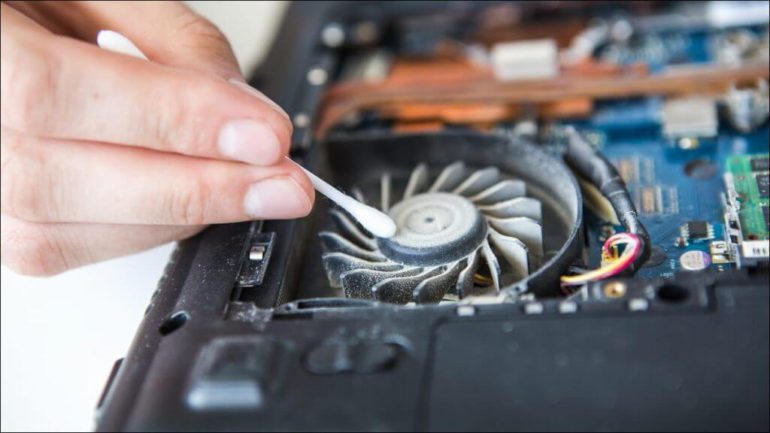
Dust collects around vents and internal cooling components. Over time, it can reduce airflow and trap heat inside the laptop.
Turn off the computer and disconnect the charger. Use short bursts of compressed air around the external vents. Hold the can upright and avoid spraying liquid propellant.
Do not use a household vacuum directly on the laptop because static electricity may damage sensitive components. Avoid pushing pins, brushes, or other objects deep into the vents.
If the laptop has years of internal dust buildup, professional cleaning may be safer and more effective.
Close Demanding Applications
High processor and graphics usage creates additional heat. Games, video editors, design software, virtual machines, video calls, and AI tools can make the cooling fan work harder.
Open Task Manager on Windows or Activity Monitor on macOS. Review which applications are using the most processing power.
Close programs that are not needed. A browser with many tabs can also generate substantial heat, especially when tabs contain video, animation, or complex web applications.
Restart the laptop if processor usage remains unusually high after closing applications.
Stop Unnecessary Background Programs
Some software continues running even when no visible window is open. Cloud storage, update tools, messaging platforms, security scans, and game launchers can all increase system activity.
Review startup applications and disable programs that do not need to open automatically.
Pause large downloads, backups, and cloud syncing when the laptop becomes hot. Resume them after the device has cooled.
Using organized data storage solutions can reduce duplicate syncing and unnecessary background file processing that contributes to heat.
Scan for Malware
Malware may use the processor continuously for hidden tasks. Some threats display advertisements, collect information, or use the laptop for unauthorized computing activity.
Update the built-in security software and run a full scan. Remove detected threats and restart the laptop.
Be cautious with unknown cleanup tools that claim to reduce temperature instantly. Some install additional unwanted programs or show misleading warnings.
Download software only from official websites or trusted application stores.
Lower Performance Settings
Maximum-performance mode allows the processor to run at higher speeds for longer periods. This increases heat and fan noise.
Switch to a balanced power plan for everyday work. Battery-saving mode can further reduce processor activity when high performance is unnecessary.
Windows users can adjust maximum processor settings through advanced power options. However, changing technical settings incorrectly may reduce performance or stability.
Start with the built-in balanced mode before making advanced adjustments.
Reduce Graphics Workload
High-resolution games, video rendering, 3D applications, and external monitors can increase graphics processor temperature.
Lower game resolution, texture quality, shadows, and frame-rate limits. Use moderate settings rather than forcing the laptop to deliver maximum visual quality.
Close recording software and background overlays while gaming. These programs add extra processor and graphics activity.
When editing video, work in shorter sessions and allow the laptop to cool between demanding exports.
Keep the Operating System Updated
Updates may contain improvements for fan control, power management, hardware drivers, and processor behavior.
Install operating system updates and restart the laptop. Check the laptop manufacturer’s support page for approved firmware and driver updates.
Avoid downloading drivers from random third-party websites. Incorrect software can cause the fan to behave improperly or prevent the system from managing temperature effectively.
Reliable technology maintenance resources can help users understand the importance of manufacturer-approved updates and routine care.
Review AI Tools and Browser Services
AI applications can place heavy demand on the processor, graphics chip, and memory. Transcription tools, image generators, coding assistants, and local AI models may continue processing data after the main task appears complete.
Close these programs when they are not required. Disable automatic launch settings and limit the number of AI browser tabs open at one time.
Modern AI computing developments are making powerful tools more accessible, but greater processing demand can also produce more heat on ordinary laptops.
Run demanding AI workloads while the laptop is positioned on a well-ventilated surface.
Use a Cooling Pad Carefully
A cooling pad can improve airflow, especially for gaming laptops and devices with bottom-facing air intakes.
Choose a pad that matches the location of the laptop’s vents. More fans do not always mean better cooling. Proper fan placement matters more than the total number.
Cooling pads may reduce surface temperature and help the internal fans work more efficiently. However, they cannot fix a broken fan, dried thermal paste, or severely clogged internal vents.
Treat a cooling pad as additional support rather than a complete repair.
Avoid Hot Environments
Room temperature affects the laptop’s ability to release heat. Using the device in direct sunlight, inside a parked car, or near a heater can quickly cause overheating.
Move to a cooler, shaded area. Improve room ventilation or use a fan to circulate air.
Allow the laptop to reach room temperature before turning it on after it has been stored in a hot location.
Do not place cold packs or ice directly against the laptop. Condensation can enter the device and cause electrical damage.
Listen for Fan Problems
A healthy laptop fan usually changes speed according to workload. Grinding, clicking, rattling, or complete silence during high temperatures may indicate a damaged fan.
Shut down the laptop if the fan makes unusual mechanical noises. Continuing to use the device may cause further damage.
Fan replacement requires opening the laptop and disconnecting delicate components. Unless the model is designed for easy servicing, professional repair is recommended.
Consider Thermal Paste Maintenance
Thermal paste helps transfer heat from the processor and graphics chip to the cooling system. Over time, it can dry out and become less effective.
Replacing thermal paste may reduce temperatures on an older laptop, but the process requires technical skill. Incorrect application can damage components or create poor contact.
Do not open a laptop that is still covered by warranty without checking the manufacturer’s conditions.
A qualified technician can clean the cooling system, replace thermal paste, inspect the fan, and test temperatures safely.
Know When to Stop Using the Laptop
Shut down the device if it smells like burning plastic, becomes painfully hot, repeatedly turns off, or shows signs of battery swelling.
A swollen battery can push against the case, keyboard, or trackpad. Stop charging the laptop and arrange professional service immediately.
Repeated thermal shutdowns are warnings, not minor inconveniences. Continued use can damage the motherboard, storage drive, or battery.
Final Thoughts
Preventing laptop overheating begins with simple habits. Use the computer on a hard surface, keep the vents clear, close demanding applications, reduce background activity, and clean visible dust carefully.
Software updates, balanced power settings, and sensible graphics options can also reduce heat. Cooling pads provide extra support but should not be used to hide a serious hardware problem.
Pay attention to changes in fan noise, temperature, and performance. Early action is usually less expensive than waiting for the laptop to fail. A cooler computer runs more smoothly, protects stored data, and gives internal components a better chance of lasting for years.