
Mistakes can happen quickly in professional communication. Sometimes emails are sent with incorrect attachments, outdated information, spelling mistakes, or incomplete details. In such situations, people often send a follow-up message asking others to ignore the earlier email.
Using phrases like “Please ignore my previous email” or finding other ways to say “Please discard my previous email” helps maintain clarity and professionalism in workplace communication. A quick correction prevents confusion and ensures everyone follows the correct information.
In today’s fast-moving digital workplace, sending a polite correction email is considered professional and responsible. Communication experts often recommend responding quickly whenever an error is noticed.
Why Correcting Emails Professionally Matters
One of the biggest reasons to send a correction email is to maintain professionalism. If incorrect information is left unaddressed, it can create confusion, delays, or even affect important decisions.
For example, an employee may accidentally send:
- The wrong attachment
- Incorrect meeting details
- Outdated pricing information
- An unfinished document
Instead of allowing confusion to continue, a short and polite correction email helps resolve the issue immediately.
Professional email etiquette encourages people to:
- Admit mistakes quickly
- Stay polite and calm
- Provide updated information clearly
- Respect the recipient’s time
Simple correction phrases often work best because they are direct and easy to understand.
Other Ways to Say “Please Discard My Previous Email”
There are many professional alternatives that sound more polished and natural in workplace communication. Depending on the situation, you can choose different phrases.
Some commonly used alternatives include:
- “Please disregard my earlier email.”
- “Kindly ignore the previous message.”
- “Please refer to the updated email below.”
- “Apologies, the earlier email was sent in error.”
- “Please use the corrected information provided here.”
- “The previous email may be disregarded.”
- “Please ignore the earlier communication and refer to this updated version.”
- “Sorry for the confusion. Kindly refer to the revised information below.”
These alternatives help emails sound more professional while avoiding repetitive wording.
How Correction Emails Improve Workplace Communication
Modern workplaces depend heavily on email communication. Employees, managers, clients, teachers, and students send hundreds of emails every week, making occasional mistakes unavoidable.
A simple correction message can:
- Prevent misunderstandings
- Save time
- Improve workflow
- Maintain trust
- Reduce stress in communication
For example:
- Managers may send updated company announcements.
- Employees may correct project files or schedules.
- Teachers may revise assignment instructions.
- Customer service teams may update pricing or order details.
In all these cases, a polite correction email keeps communication smooth and organized.
Why Short Correction Emails Work Best
Communication experts often recommend keeping correction emails short and clear. Long explanations are usually unnecessary.
The goal is simple:
- Inform recipients that the previous email should be ignored
- Share the correct information clearly
- Avoid additional confusion
A professional correction email should:
- Acknowledge the mistake politely
- Provide updated or corrected details
- Maintain a respectful tone
- Stay concise and easy to read
For example:
“Apologies for the confusion. Please disregard my previous email and refer to the updated information below.”
This approach sounds professional without becoming overly formal.
How Polite Language Builds Professional Relationships
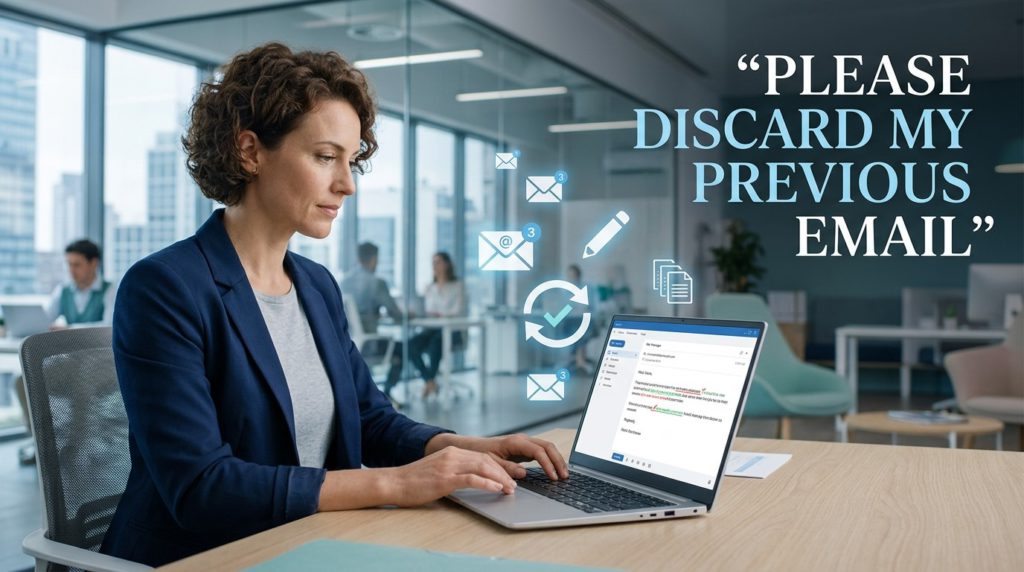
The tone of an email matters greatly in business communication. Even small wording changes can affect how professional and respectful a message sounds.
Using polite phrases shows:
- Accountability
- Respect
- Professionalism
- Attention to detail
People generally appreciate quick corrections more than silence or delayed responses. Correcting an error promptly often builds trust instead of damaging it.
Professional communication is not about avoiding every mistake. It is about handling mistakes responsibly and clearly.
Common Situations Where Correction Emails Are Needed
Correction emails are commonly used in situations such as:
- Sending the wrong attachment
- Sharing incorrect dates or meeting times
- Sending incomplete documents
- Typing errors in important information
- Updating project details
- Correcting pricing or invoice information
In fast-paced digital workplaces, these situations happen frequently. A simple correction message helps prevent larger problems later.
Best Practices for Sending Correction Emails
To make correction emails more effective:
- Send the correction quickly
- Use a clear subject line
- Keep the message brief
- Provide updated details clearly
- Avoid unnecessary explanations
- Stay polite and professional
A fast and respectful correction helps maintain smooth communication and prevents misunderstandings from growing.
Conclusion
Learning other ways to say “Please discard my previous email” is useful for professional communication. Mistakes happen regularly in digital workplaces, but quick and polite correction emails help maintain clarity, trust, and professionalism.
Simple phrases like:
- “Please disregard my earlier email”
- “Kindly ignore the previous message”
- “Please refer to the updated email”
allow professionals to correct mistakes respectfully and efficiently.
Strong communication is not about being perfect all the time. It is about responding clearly, responsibly, and professionally whenever errors occur.